logo
家へ
製品
わたしたち に つい て
工場ツアー
品質管理
連絡 ください
見積依頼
ニュース
ブログ
ホーム ブログ

Comparing Dsub and DB9 Connectors Key Differences and Uses

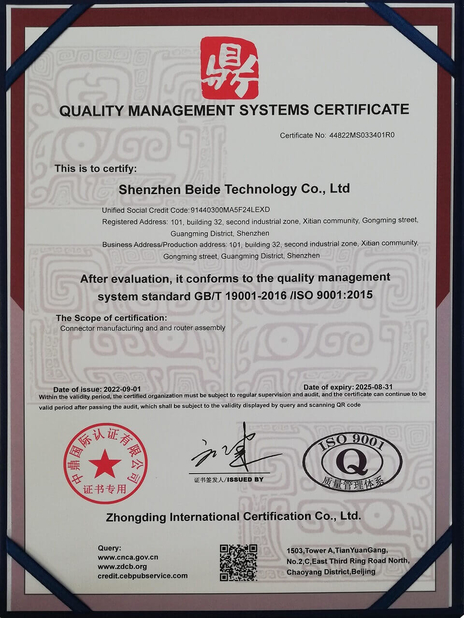
認証
中国 DONGGUAN BEDE MOLD AND PLASTIC FRODUCTS CO., LID 認証
顧客の検討
こんにちは エリッサ 去年の初め 私の同僚が 20本の電線を 注文しました あなたの会社で作ったケーブルは かなりうまく機能しました 私はあなたの会社を使って 将来 このようなケーブルを もっと生産することに興味があります

—— マシュー・ゲッツマン

競争力のある価格,高品質のサービス,私たちは長期間あなたと協力します!

—— ドンゲク・イリア

オンラインです
会社 ブログ
Comparing Dsub and DB9 Connectors Key Differences and Uses
最新の会社ニュース Comparing Dsub and DB9 Connectors Key Differences and Uses

In the interconnected world of electronic devices, connectors play a pivotal role. Among the multitude of connector specifications available, D-Sub and DB9 stand out as two prevalent types that engineers frequently encounter. This article provides a detailed technical analysis of these connectors, comparing their specifications, applications, and historical development to assist professionals in making informed selection decisions.

1. D-Sub Connectors: The Versatile Foundation

D-Subminiature connectors, commonly called D-Sub connectors, derive their name from their distinctive D-shaped metal housing. These multi-pin connectors serve as fundamental components in computers, communication equipment, and industrial control systems, facilitating data transfer, signal transmission, and power delivery.

1.1 Technical Specifications and Variants

D-Sub connectors are characterized by several key parameters:

  • Pin configurations: Available in 9, 15, 25, 37, and 50-pin arrangements
  • Electrical properties: Designed to meet specific voltage, current, and impedance requirements
  • Mechanical dimensions: Standardized form factors ensure cross-compatibility
  • Environmental resilience: Engineered to perform under varying temperature, humidity, and vibration conditions

Classification options include:

  • Mounting styles: Through-hole (DIP), surface-mount (SMT), and cable-mounted versions
  • Gender options: Male and female configurations
  • Specialized types: Standard, high-density, waterproof, and high-temperature variants
1.2 Application Domains

D-Sub connectors find extensive use across multiple industries:

  • Computer peripherals (displays, printers, scanners)
  • Telecommunications infrastructure (modems, routers)
  • Industrial automation (sensors, actuators, control systems)
  • Specialized equipment in medical, aerospace, and defense sectors
2. DB9 Connectors: The Serial Communication Standard

As a specialized 9-pin member of the D-Sub family, DB9 connectors became synonymous with RS-232 serial communication. While their prevalence has diminished with the rise of USB interfaces, they remain relevant in specific legacy applications.

2.1 Technical Specifications and Pinout

Key DB9 characteristics include:

  • Fixed 9-pin configuration with standardized RS-232 pin functions:
    • Transmit Data (TXD)
    • Receive Data (RXD)
    • Ground (GND)
    • Control signals (DTR, DCD, DSR, RTS, CTS)
  • Electrical parameters compliant with RS-232 specifications
  • Standardized mechanical dimensions
  • Support for configurable serial communication parameters (baud rate, data bits, parity)
2.2 Application Scenarios

Primary DB9 applications include:

  • Legacy computer peripherals (modems, mice, printers)
  • Industrial control systems (PLCs, instrumentation)
  • Specialized medical and test equipment
3. Key Differences Between D-Sub and DB9 Connectors
3.1 Pin Count Variations

While D-Sub connectors offer multiple pin configurations (9-50 pins), DB9 specifically denotes the 9-pin variant optimized for serial communication.

3.2 Application Scope

D-Sub connectors serve diverse functions including video, parallel data, and control signal transmission. DB9 connectors specialize exclusively in serial communication applications.

3.3 Standardization Levels

DB9 connectors maintain higher standardization through RS-232 specifications, while D-Sub implementations may vary more significantly between manufacturers.

3.4 Historical Development

D-Sub technology originated in the 1950s, while DB9 adoption accelerated during the 1970s with the proliferation of serial communication.

4. Future Development Trends
4.1 D-Sub Evolution
  • Miniaturization: Development of compact, high-density versions
  • Enhanced performance: Support for higher-speed data transmission
  • Smart features: Integration of monitoring and diagnostic capabilities
  • Customization: Expanded options for specialized applications
4.2 DB9 Adaptation
  • Gradual replacement: Ongoing displacement by USB interfaces
  • Niche preservation: Continued use in legacy industrial systems
  • Interface bridging: Development of USB-to-DB9 conversion solutions
5. Conclusion

D-Sub connectors remain versatile solutions for diverse interconnection needs, while DB9 connectors maintain relevance in specific serial communication applications. Understanding their technical distinctions enables optimal selection for particular use cases. As connectivity technologies advance, both connector types continue evolving to address emerging engineering requirements while supporting legacy system integration.

パブの時間 : 2026-03-18 00:00:00 >> blog list
連絡先の詳細
DONGGUAN BEDE MOLD AND PLASTIC FRODUCTS CO., LID

コンタクトパーソン: Ms. admin

電話番号: 15915396878

私達に直接お問い合わせを送信 (0 / 3000)